German Home Prices Rise 0.6% as Housing Market Momentum Slows
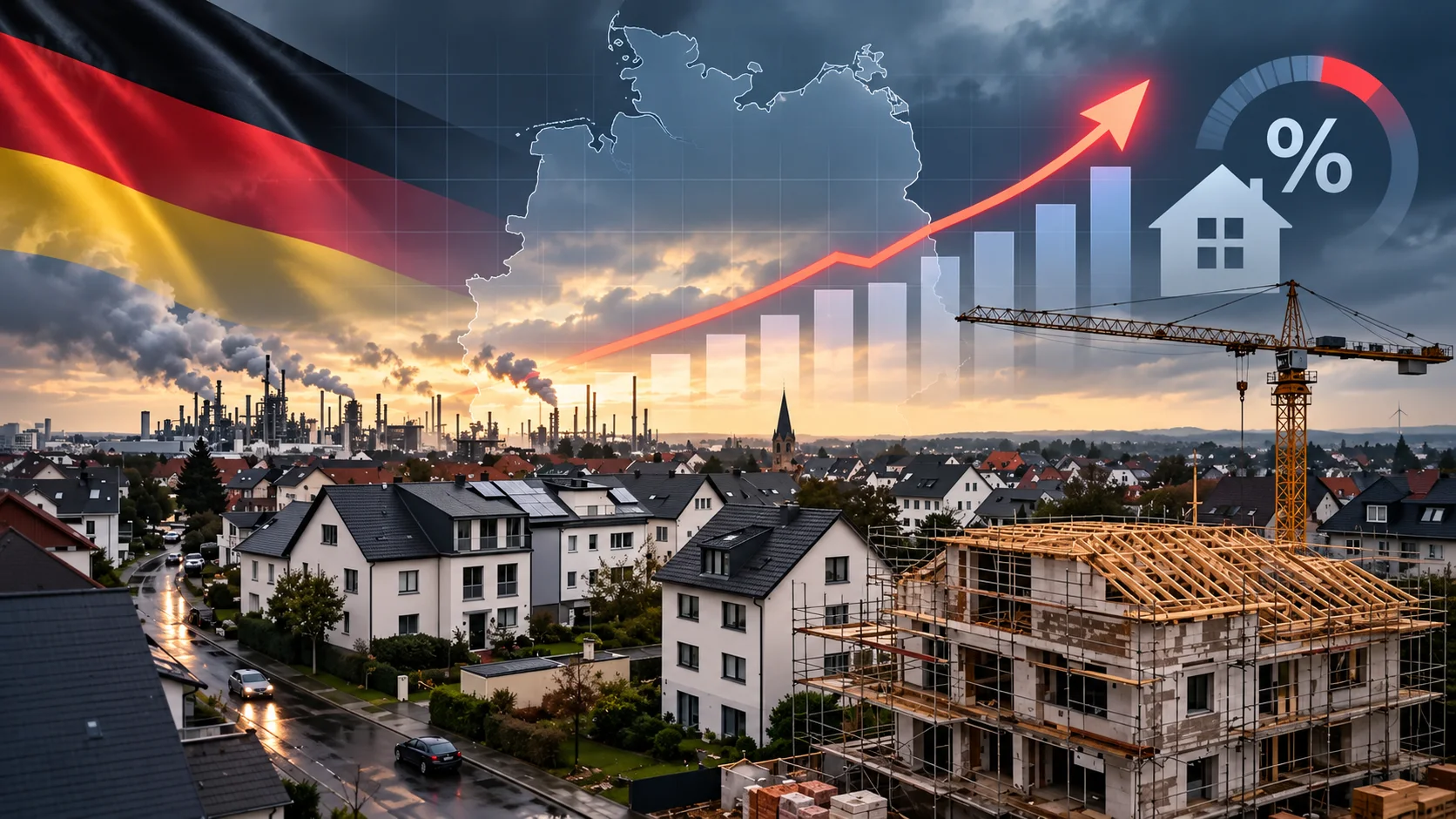
Germany’s residential property market experienced price growth in the second quarter of 2026, but at a much lower pace than the previous quarter. The increase has slowed as the housing market has weakened as property prices have been affected by financing costs and uneven regional demand.
According to Germany’s Federal Statistical Office, residential property prices increased by 0.6% compared with the second quarter of 2025 and rose 0.3% from a quarter earlier. The yearly growth was the lowest since prices started to improve in the second half of 2024. The annual first-quarter increase was also lowered down to 1.2% from the previously estimated 1.4%.
Germany’s seven largest cities, Berlin, Hamburg, Munich, Cologne, Frankfurt, Stuttgart and Düsseldorf, have been experiencing a particularly noticeable slowdown. Prices of apartments in these cities fell by 0.4% over the year and by 0.5% over the previous quarter. Nonetheless, prices for single- and two-family homes were up 0.7% over the year.
Beyond the largest metropolitan areas, the housing market exhibited a more mixed pattern. While unit prices in other major centres recorded a year-on-year increase of 2.0%, prices for single and two-family homes rose by 0.7% during the same period. Rural markets showed different trends depending on property type and population density.
The ongoing rise in borrowing and financing costs is putting pressure on housing demand. Higher construction and financing expenses are also adding pressure to the wider residential property market, while higher borrowing costs are making it more expensive for buyers to obtain a housing loan.