South Korea Plans 56,000 Public Housing Units in Capital Region for 2027
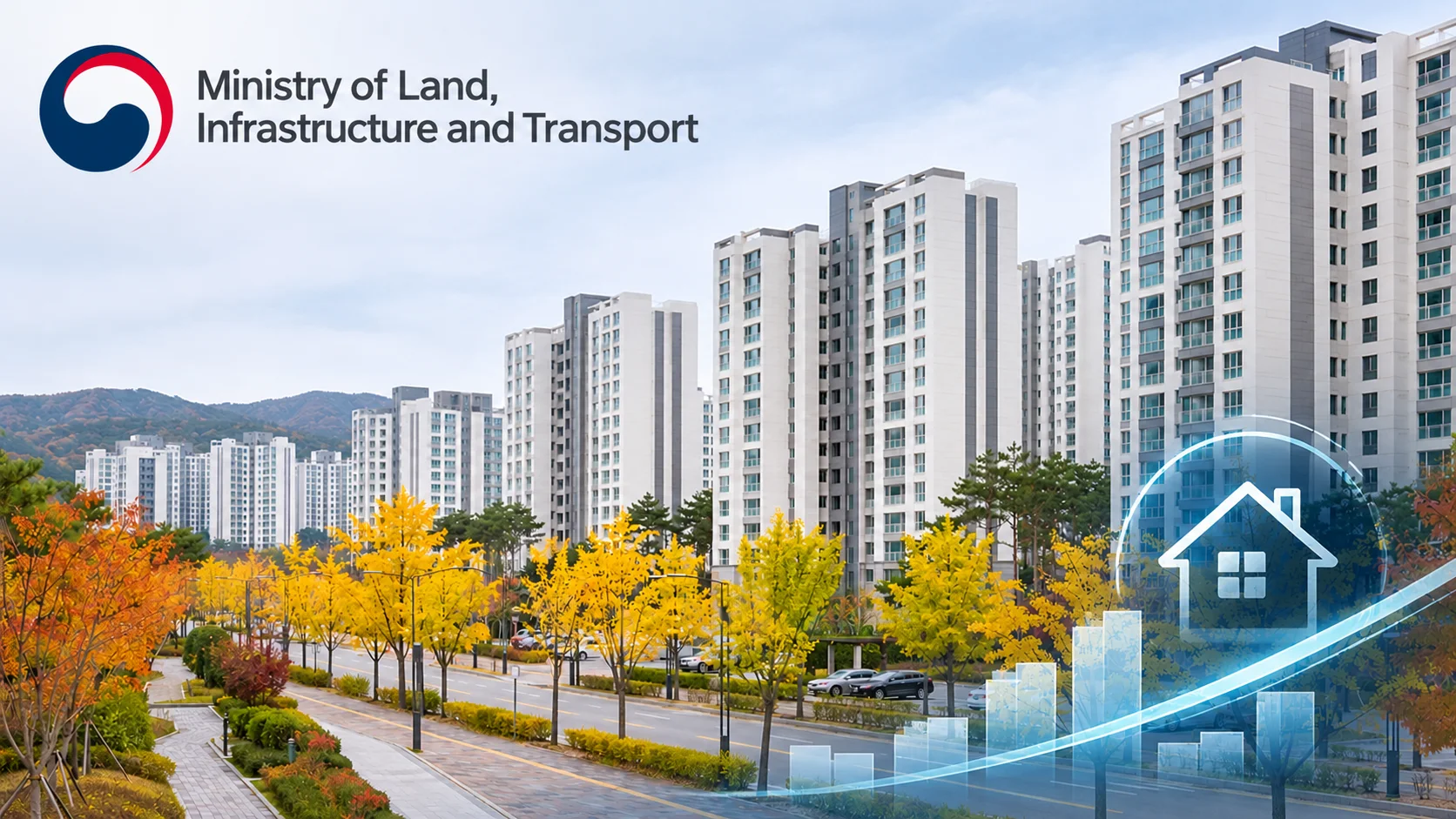
South Korea's Ministry of Land, Infrastructure and Transport plans to recruit residents for 56,000 public housing units in the capital region next year. The total covers 35,000 public sale homes and 21,000 public rental homes.
The ministry announced the plan on 26 November at its fourth regular housing supply briefing, chaired by First Vice Minister Kim I-tak. The figure is roughly double the 28,000-unit annual average for 2021 to 2025. It is also about 44 per cent above this year's provisional 39,000.
56,000 Public Housing Units by Region and Type
Public sale units are split between Seoul (3,000), Gyeonggi Province (27,000) and Incheon (5,000). The largest single site is Namyangju Wangsil, a third-generation new town, with about 6,800 units. Suwon Dangsu follows with 3,200.
Public rental units are 1,000 in Seoul, 17,000 in Gyeonggi and 3,000 in Incheon. Recruitment will also open for the first time at urban public housing complexes, covering 3,800 units.
For young people without homes and newlyweds, about 2,700 share-accumulation sale units will be offered at Namyangju Wangsil and Suwon Dangsu. Buyers gradually take ownership shares while paying in instalments.
Rental recruitment will also start earlier, about two and a half years before occupancy instead of one. The ministry says this gives applicants time to confirm eligibility and plan their moves.
Purchase Guarantees Extended to Private Land
The ministry will widen the scheme under which the Korea Land and Housing Corporation (LH) buys unsold units at an agreed price. Until now it applied only to public land supplied by LH. It will now cover public and private land in regulated areas of the capital region.
It applies to apartments and townhouses of 30 to 85 sq m, and only to projects that can start construction by 2028. Projects starting in the first half of next year will receive the maximum benefits.
The purchase price for private land has not been set. The ministry is considering the 85 to 92 per cent ratio used for public land, applied to appraised value. Details are due next month.
Faster Approvals and Market Conditions
The ministry says its shortest construction model for public land cuts the time from site announcement to construction from 68 months to 37. District designation for six new sites totalling 77,000 units, including Gimpo Ara and Guri Geonwon, is targeted for February next year.
The ministry also reported that Seoul apartment prices rose 0.01 per cent in the fourth week of November, the smallest rise in 94 weeks. A decision on extending land transaction permit zones will follow a comprehensive market review.