Yongin Mayor Seeks Government Support for Semiconductor Cluster Housing and Infrastructure
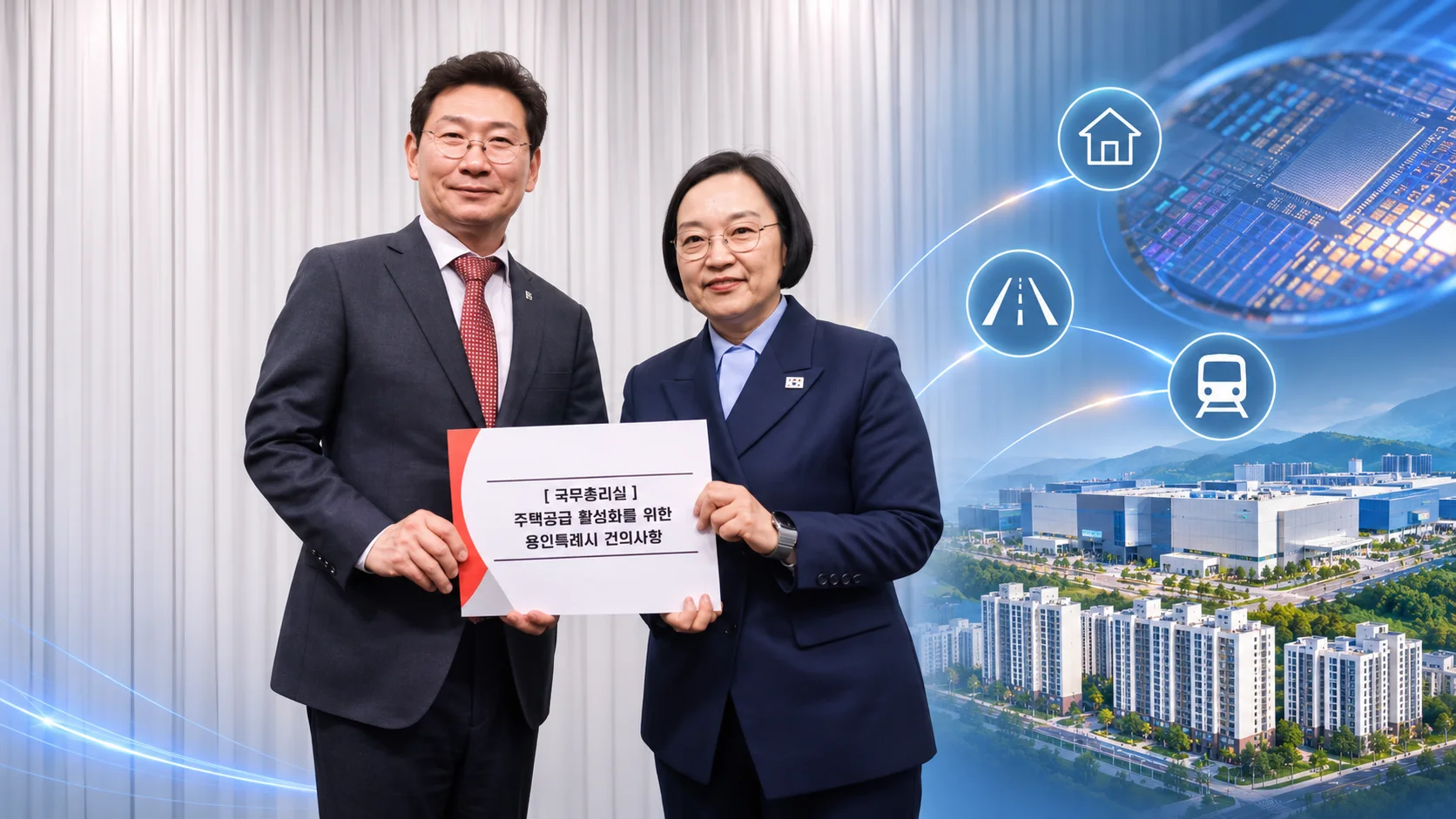
Yongin Mayor Lee Sang-il has requested stronger South Korean government support for semiconductor cluster housing, transport networks and essential infrastructure. The appeal comes as the city prepares for substantial population growth linked to its expanding semiconductor industry.
Lee presented eight requests during a meeting hosted by Prime Minister Han Seong-sook in Seoul's Jongno District on November 18. The gathering brought together local government leaders from 24 cities in Gyeonggi Province.
Yongin Semiconductor Cluster Housing Requirements
The mayor said Yongin's semiconductor cluster, covering approximately 3.6 million pyeong, includes industrial complexes associated with Samsung Electronics and SK hynix.
More than 400,000 additional residents are expected to move into the area as development progresses.
Lee estimates that over 190,000 homes will be required to accommodate this growth. However, the planned public housing district in Idong-eup, Cheoin District, currently provides for approximately 20,000 units.
He urged the government to designate additional large-scale residential support districts and accelerate development of the existing Idong-eup housing project.
The mayor also warned that delayed housing delivery could create shortages across the southern Seoul metropolitan area and complicate efforts to stabilise property prices.
Railway and Road Infrastructure Expansion
Transport infrastructure formed another major part of the proposal.
Lee requested the inclusion of three railway projects in the fifth national railway network plan: the Gyeonggi Southern Metropolitan Railway, the Gyeonggang Line extension and the Gyeonggi Southern East-West Line.
He also sought faster progress on the Bundang Line extension connecting Giheung Station, Dongtan 2 and Osandae Station.
Road proposals included additional capacity along National Route 45 and a bypass associated with National Route 42.
For Yongin Platform City, Lee requested that an interchange be retained in the planned underground Gyeongbu Expressway project.
Housing Regulations and Water Supply
The mayor proposed regulatory adjustments to encourage private housing development, including greater flexibility over infrastructure contributions and residential district planning requirements.
He also requested changes to approval procedures for renovation plans covering ageing planned cities.
Water infrastructure remains another concern.
Yongin currently has a daily water supply capacity of approximately 445,000 cubic metres. The city estimates that another 100,000 cubic metres per day will be required to support future population growth.
Lee called for coordinated government action to ensure that housing, transport and utility infrastructure are delivered alongside the semiconductor developments.